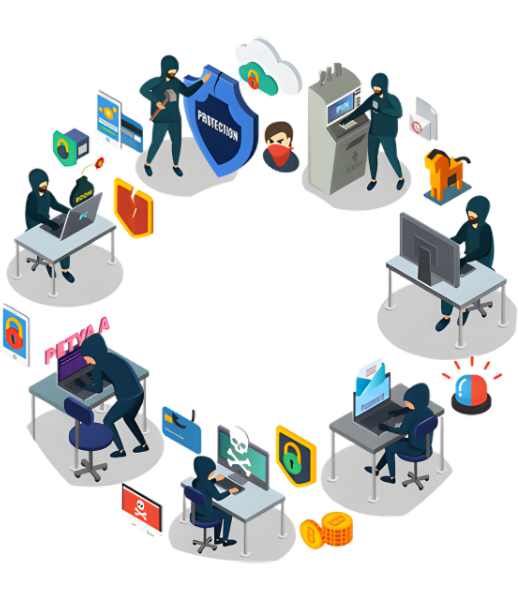

Attack Simulation & Red Teaming

Testing Defenses Before Real Threats Do

Cyber threats nowadays are more sophisticated, focused, and tenacious. Organisations must adopt an attacker's mindset in order to protect against them. In order to test your defences in real-world scenarios without waiting for a genuine breach, proactive security techniques like Attack Simulation and Red Teaming are useful.
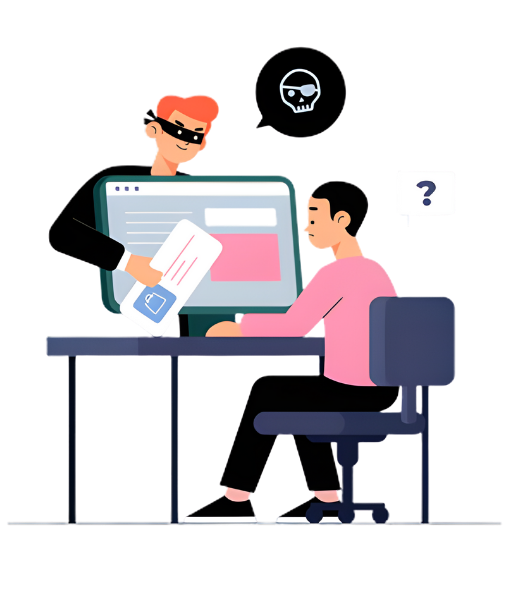

Anticipate the Attacks, Strengthen your Defense

Assess your security controls against a broad spectrum of real-world threats, including malware, ransomware, vulnerability exploits, and advanced persistent threats (APTs).

Such exercises help uncover security weaknesses, enhance incident response processes, and improve threat detection capabilities, ensuring your SOC is prepared for actual cyber threats.

These simulations detect vulnerabilities, strengthen response measures, and ensure defenses are current and effective against the latest cyber threats.

Understand user behaviors, enhance security awareness, and pinpoint gaps to ensure your team is ready for real-world cyber threats.

Management Test Cases

Simulating sophisticated attack scenarios to test defenses.

Red Teaming
Attack Simulation

Assessing and improving defensive capabilities.

Blue Teaming
Defense Assessment

Conducting simulated phishing attacks to test employee awareness.

Phishing Simulation
Employee Testing

What is Attack Simulation?

Attack simulation tests the ability of your systems, networks, and personnel to recognise and react to threats by simulating actual cyberattacks. Phishing tactics, malware infections, lateral movement, and privilege escalation are a few examples of these simulations.

Purpose:

  • icon Assess technical vulnerabilities
  • icon Evaluate employee awareness and response
  • icon Improve detection and incident response times

Benefits of Web Application Penetration Testing

Early Detection of Security Gaps

Simulating breach attacks uncovers gaps in network defenses, endpoint security, and data access controls, ensuring vulnerabilities are addressed before exploitation.

Improved Incident Response Readiness

Data breach simulations train SOC teams, IT staff, and executives to handle security incidents, reducing downtime and costs.

Stronger Defense Against Cyber Threats

Simulate attacks regularly to enhance security controls and prevent malware and unauthorized access.

Regulatory Compliance & Risk Reduction

Use simulated attacks to ensure compliance and prevent fines or data violations.

Cost Savings & Business Continuity

Proactively fix security weaknesses to lower costs and maintain seamless operations.

Comprehensive Attack Simulation Strategy

Risk-Based Prioritization

Prioritize high-risk threats by likelihood and impact to optimize resources and enhance security.

Attack Surface Mapping

Detect vulnerabilities and entry points to achieve a complete view of your attack surface.

Incident Response

Test and improve incident response with simulated attacks for faster detection and mitigation.

Malware & Phishing Simulation

Test defenses with simulated attacks, improve detection, and raise employee awareness to reduce cyber risk.

Difference between Red Team VS Attack Simulation

Attack Simulation

  • icon Pre-defined, often tool-driven
  • icon Test specific controls or responses
  • icon Often known to some IT/security teams
  • icon Short-term (days/weeks)
  • icon Phishing simulation

Red Teaming

  • icon Broad and adaptive
  • icon Emulate real attackers end-to-end
  • icon Usually kept secret (Black Box)
  • icon Long-term (weeks/months)
  • icon Full-scale breach and lateral movement

What is Red Teaming?

In order to assess how well-prepared your defences (Blue Team) are, a group of ethical hackers (the Red Team) imitate actual threat actors in a more sophisticated, covert type of attack simulation called "red teaming," frequently without the Blue Team's awareness.

Red Teaming focuses on:

  • icon Realistic, adversary-style behavior
  • icon Bypassing existing defenses
  • icon Testing physical, technical, and human vulnerabilities
  • icon Full attack chain: infiltration - data exfiltration

Our Services

Q. Breach and Attack Simulation (BAS)
A.

Through automated breach and attack simulations, we continuously assess your security posture, evaluating defenses against malware, ransomware, phishing, insider threats, and zero-day vulnerabilities.

A.

Our team conducts data breach simulation exercises to evaluate organizational responses to unauthorized data access, exfiltration, or exposure, refining data protection policies and incident response strategies.

A.

Conduct simulations of real-world cyber threats, including APTs, cybercriminal tactics, and insider attacks, to test and strengthen organizational detection and response capabilities.

A.

We assess the effectiveness of firewalls, SIEM, EDR, and network monitoring systems against simulated attacks, ensuring all security controls are correctly configured and performing as intended.

A.

Generate detailed reports outlining simulated attack techniques, identified security gaps, and actionable recommendations to strengthen organizational defenses.

Reporting Standard

Our reports are aligned with industry standards, delivering clear, actionable
insights to strengthen thick client application security.

Build Resilience by Thinking Like an Attacker

Cybersecurity is about resilience, not just defence. By putting your company in the shoes of a hacker, Attack Simulation and Red Teaming help you identify weaknesses and improve your preparedness. Testing your defences is now necessary in the current threat scenario; it is no longer discretionary.

Get Started Today